Most visitors come to Pisa to see its famous Leaning Tower, but the city has much more to offer. Beyond the iconic monuments, Pisa is a lively university city filled with elegant squares, riverside palaces, medieval streets, and fascinating stories. Here are some of the best things to do in Pisa…
Visit Piazza Dei Miracoli
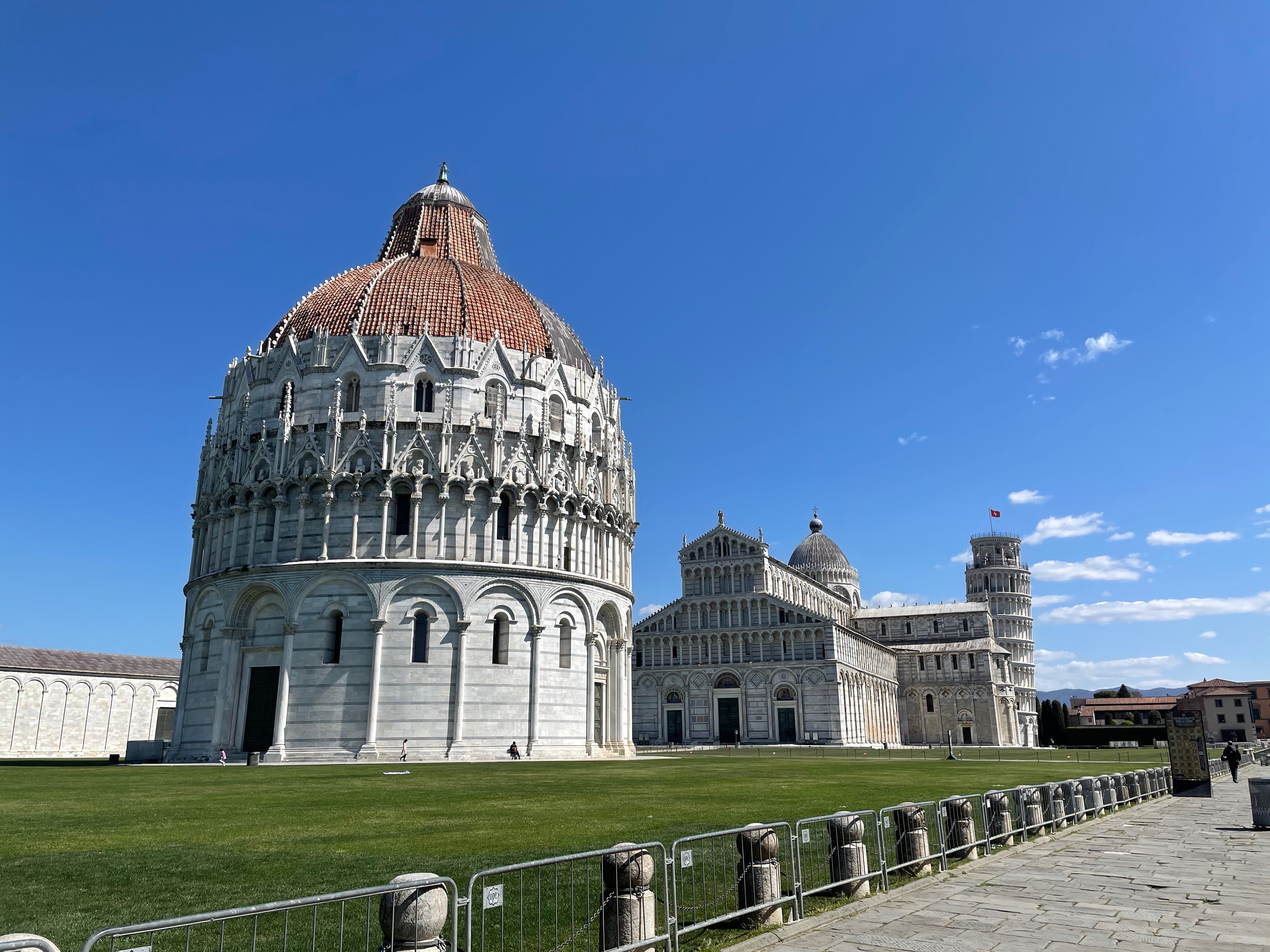
No visit to Pisa is complete without exploring Piazza dei Miracoli, one of Italy's most beautiful monumental complexes and a UNESCO World Heritage Site.
Here you'll find:
- The Leaning Tower of Pisa, the city's world-famous symbol. Legend says that from the top of the Leaning Tower, Galileo Galilei dropped objects of different weights to study the laws of motion. Whether the experiment actually happened here or not, the story reflects Pisa's long connection with science and discovery.
- The Cathedral (Duomo), a masterpiece of Pisan Romanesque architecture. Tradition says that while observing a swinging lamp inside the Cathedral, Galileo Galilei began developing ideas about the motion of pendulums - an observation that would later influence the study of physics.
- The Baptistery, renowned for its remarkable acoustics. Thanks to the circular architecture, the sound echoes and overlaps, creating what feels like a natural choir—without any electronic amplification.
- The Camposanto Monumentale, an extraordinary medieval cemetery with beautiful frescoes, including its most famous masterpiece, The Triumph of Death. According to tradition, the Camposanto was built using sacred soil brought back from Golgotha during the Crusades, giving the cemetery its name, which means "holy field". Inside the Camposanto, you'll also find a statue of Leonardo Fibonacci, Pisa's most celebrated mathematician.
If you're interested in visiting the monuments, ask at the conference reception desk when you arrive for a complimentary admission ticket. The ticket includes access to all the monuments in Piazza dei Miracoli except the Leaning Tower, which requires a separate ticket
For opening hours, ticket information, and the latest visitor updates, please check the official website https://www.opapisa.it/en/.
Discover Piazza dei Cavalieri
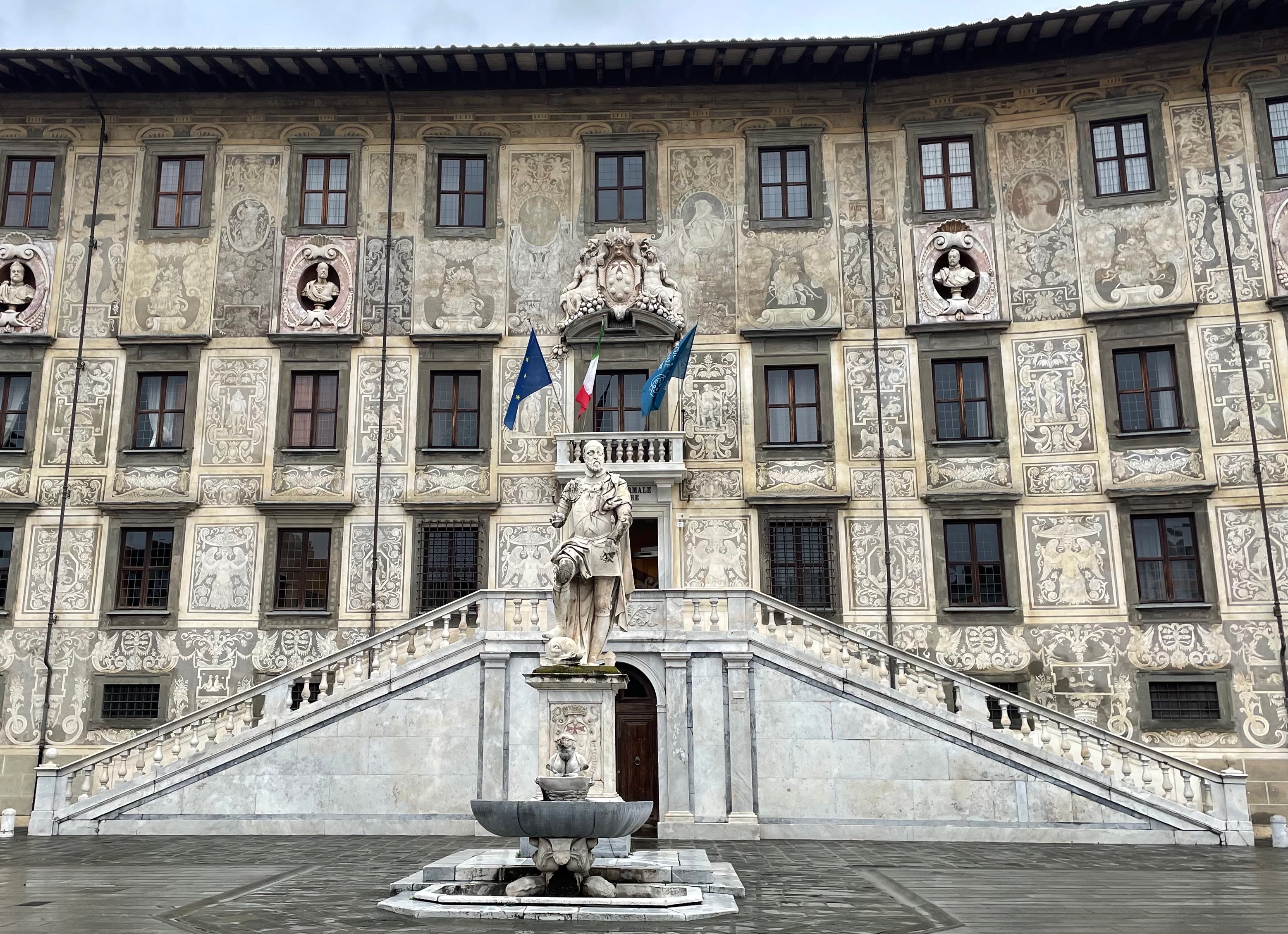
Just a short walk from Piazza dei Miracoli lies Piazza dei Cavalieri, once the political heart of medieval Pisa and later transformed by Giorgio Vasari during the Renaissance.
In the 16th century, Cosimo I de' Medici, whose statue stands at the center of the square, turned Piazza dei Cavalieri into the headquarters of the Order of the Knights of Saint Stephen, a military order created to defend the Tuscan coast from pirates and the Ottoman fleet. As founder and Grand Master of the order, Cosimo commissioned the renovation of the square, including the Palazzo della Carovana, redesigned by Vasari as the knights' headquarters.
On the edge of the square stands the Palazzo dell'Orologio, built over the site of the former Tower of Famine. According to tradition, this is where Count Ugolino della Gherardesca and his family were imprisoned and left to starve in 1289—a tragedy immortalized by Dante in Inferno, Canto XXXIII.
Today, Piazza dei Cavalieri has a new role as a center of knowledge: it is home to the Scuola Normale Superiore, one of Italy's most prestigious universities. Founded by Napoleon in 1810, it has educated distinguished scholars, including several Nobel Prize winners, and remains one of the country's leading centers for higher education.
Even if the interiors of its historic buildings are only accessible during scheduled guided visits, Piazza dei Cavalieri is well worth a stop. Take time to admire the elegant façades of Palazzo della Carovana, the Church of Santo Stefano dei Cavalieri, and the harmony of this remarkable Renaissance ensemble. You can find more information at piazzadeicavalieri.sns.it/en/
Stroll along the Lungarni
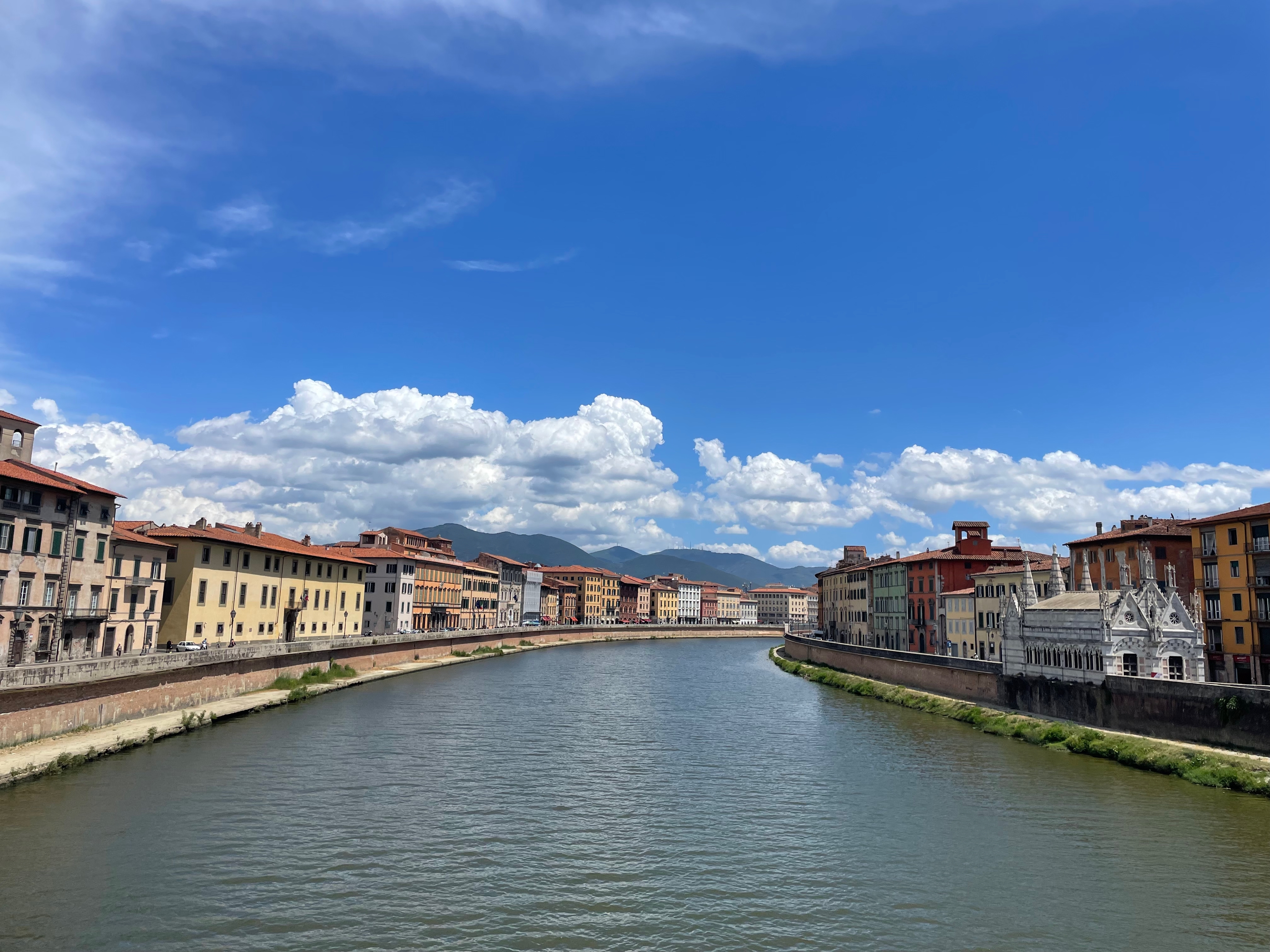
The Lungarni, the streets that run along the River Arno, are among the most charming places to experience Pisa. They are perfect for a relaxing walk, but they are also an open-air gallery of historic buildings, with elegant façades that reflect centuries of the city's history.
Among the highlights, don't miss:
- Palazzo Blu, one of Pisa's most recognisable buildings, named after its distinctive blue façade. Today it hosts art exhibitions and cultural events, but its elegant exterior alone makes it worth a stop.
- Santa Maria della Spina, a small Gothic church on the riverbank that looks almost like a jewel carved in marble. Originally built in the 13th century to house a relic of the Crown of Thorns, it is one of Pisa's most fascinating hidden treasures.
Even Giacomo Leopardi, one of Italy's most celebrated poets and thinkers, was fascinated by the beauty of the Lungarni during his stay in Pisa in 1827 writing to his sister “This Lungarno is such a beautiful, wide, magnificent, cheerful and delightful sight that it makes one fall in love.” A plaque on Lungarno Pacinotti recalls his admiration for the city's riverside views.
You can find more detailed info about Lungarni at https://www.turismo.pisa.it/en/itinerary/lungarni.
Hidden Gems and Lesser-Known Attractions
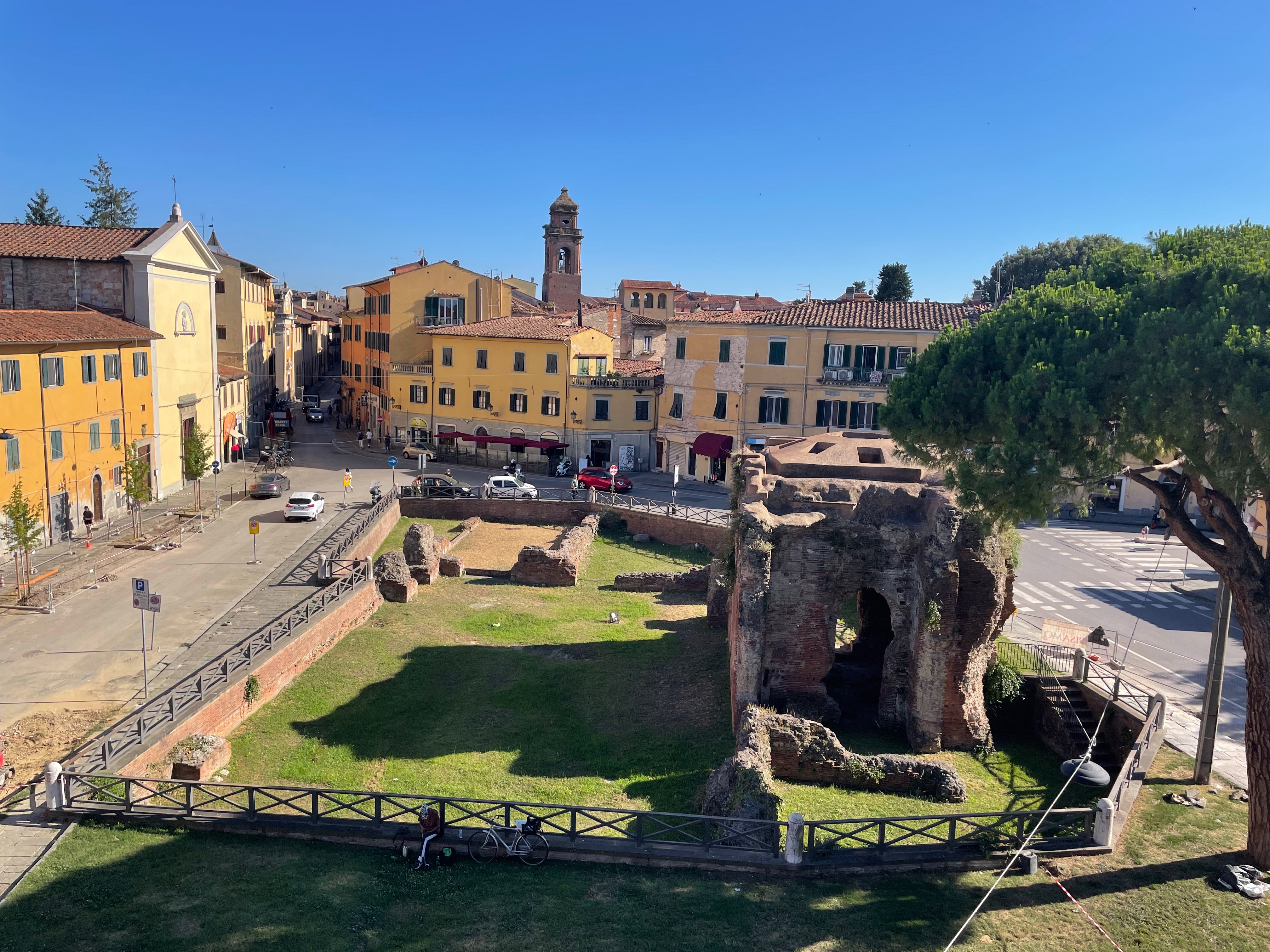
See Pisa from Above: Walk the City Walls
For a unique perspective, walk along the ancient city walls surrounding Piazza dei Miracoli. This elevated path offers spectacular views of the Leaning Tower, the Cathedral, and the rooftops of Pisa. It's a peaceful experience and one of the city's lesser-known attractions. You can find more information at https://www.muradipisa.it/en/.
Keith Haring's "Tuttomondo"
Few visitors expect to find one of the largest public murals in Europe just a few minutes from the train station. Tuttomondo, created by the American artist Keith Haring in 1989, is his last large-scale public work and symbolizes peace, harmony, and cultural diversity.
Visit the World’s Oldest University Botanic Garden
Located close to the conference venue and Piazza dei Miracoli, the University of Pisa Botanic Garden offers a peaceful break from the city. Founded in 1543, it is the oldest university botanic garden in the world, and hosts plant collections from several continents. More information, including opening hours and tickets, is available at https://www.ortomuseobot.sma.unipi.it/en/
Taste Pisa: Don't Miss Cecina
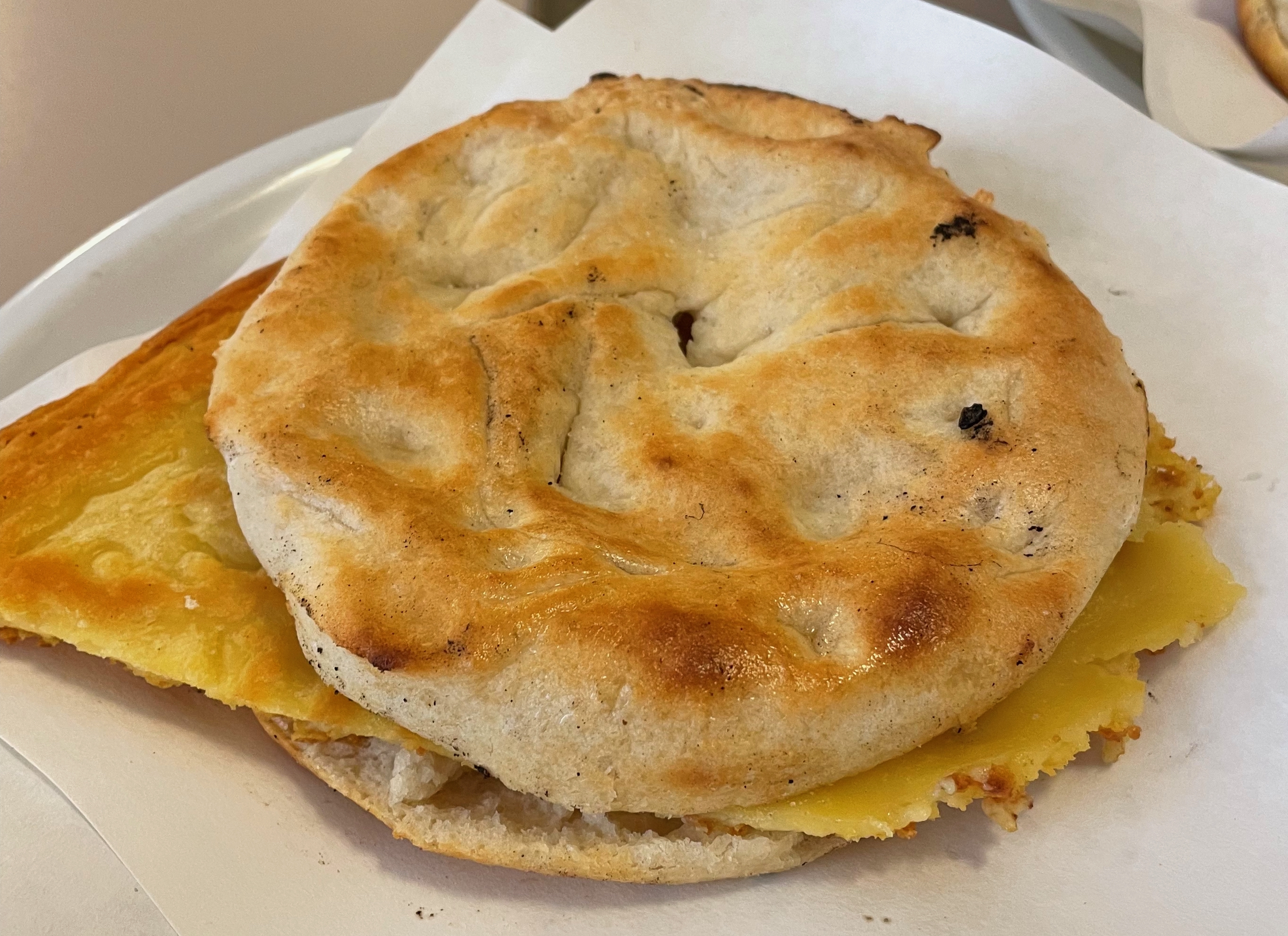
No visit to Pisa is complete without trying cecina, one of Tuscany's most beloved street foods. This simple yet delicious dish, made with chickpea flour, water, olive oil, and salt, is known by different names along the Tuscan and Ligurian coasts: cecina in Pisa, torta di ceci in nearby Livorno, and farinata in Liguria.
Baked in a wood-fired oven until golden and crispy on the outside while soft and creamy inside, cecina is a true local tradition. You can order it on its own as a quick snack or, like many locals do, inside a slice of fresh Tuscan bread (focaccina con cecina). It is the perfect choice for a simple and authentic lunch or a tasty break while discovering the city.
Although you'll find similar versions along the Tuscan coast and beyond, Pisa has a long tradition of preparing cecina, and tasting a freshly baked slice is one of the most authentic culinary experiences the city has to offer.
Beyond Pisa
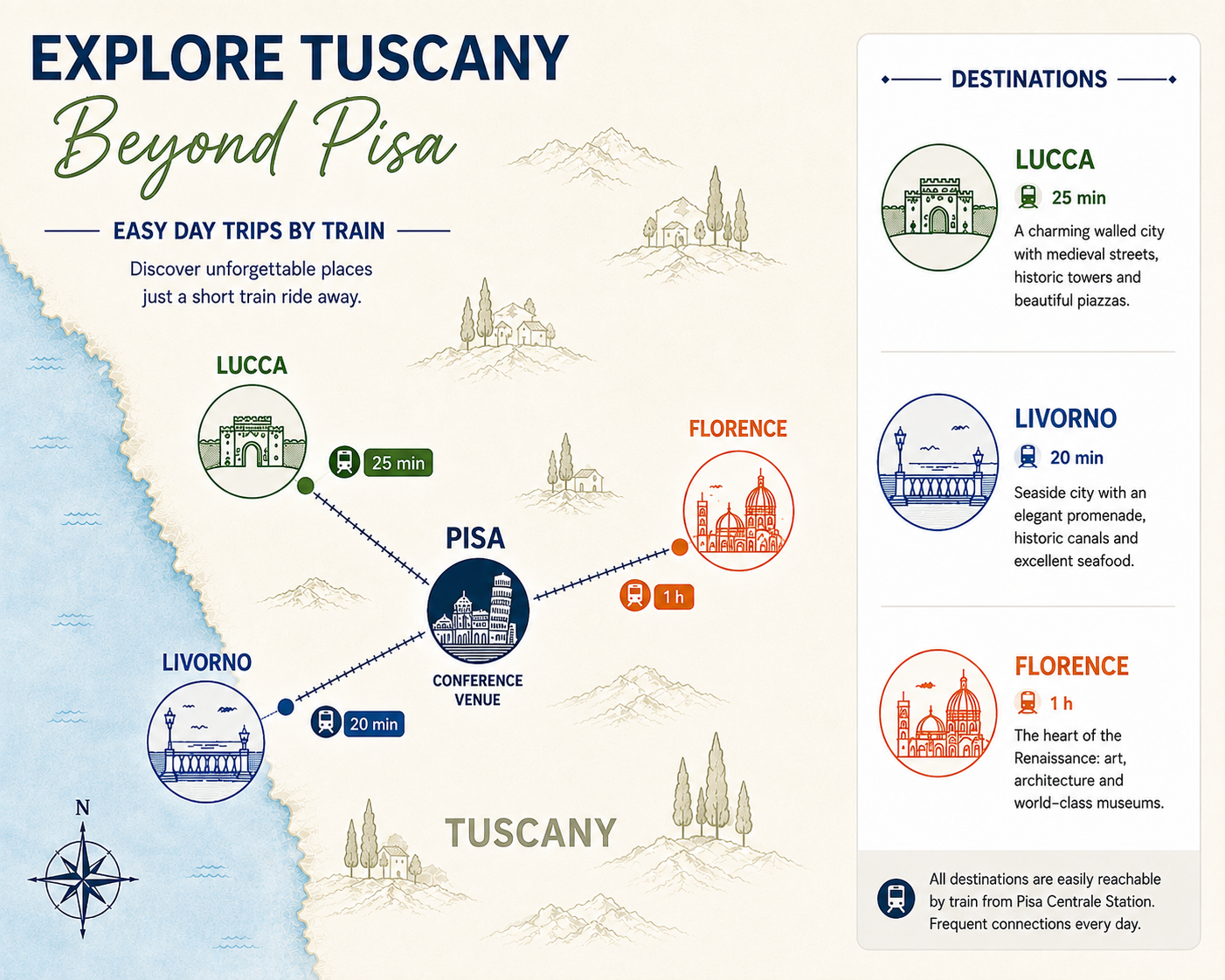
Pisa is the perfect starting point to discover the beauty of Tuscany and beyond. Thanks to its excellent train connections, you can easily reach charming medieval towns, vibrant coastal cities, Renaissance treasures, and breathtaking landscapes — all within a short journey from the conference venue. Here are a few suggestions.
Lucca (≈25 min) is one of Tuscany's most charming towns, famous for its perfectly preserved Renaissance walls, elegant piazzas, and picturesque streets. Rent a bike to ride along the city walls, explore its historic center, and enjoy the relaxed atmosphere.
Livorno (≈20 min) is a vibrant seaside city known for its scenic waterfront, historic canals, and excellent seafood. Take a stroll along the Terrazza Mascagni, discover the charming Venezia Nuova district, or relax by the sea.
Florence (≈1 h) is the birthplace of the Renaissance and one of Italy's most iconic cities. Admire world-famous masterpieces, stunning architecture, and lively squares while exploring landmarks such as the Duomo, Ponte Vecchio, and Piazza della Signoria.
Supported By
Gold Sponsors




Silver Sponsors



Organized By

Proceedings Support